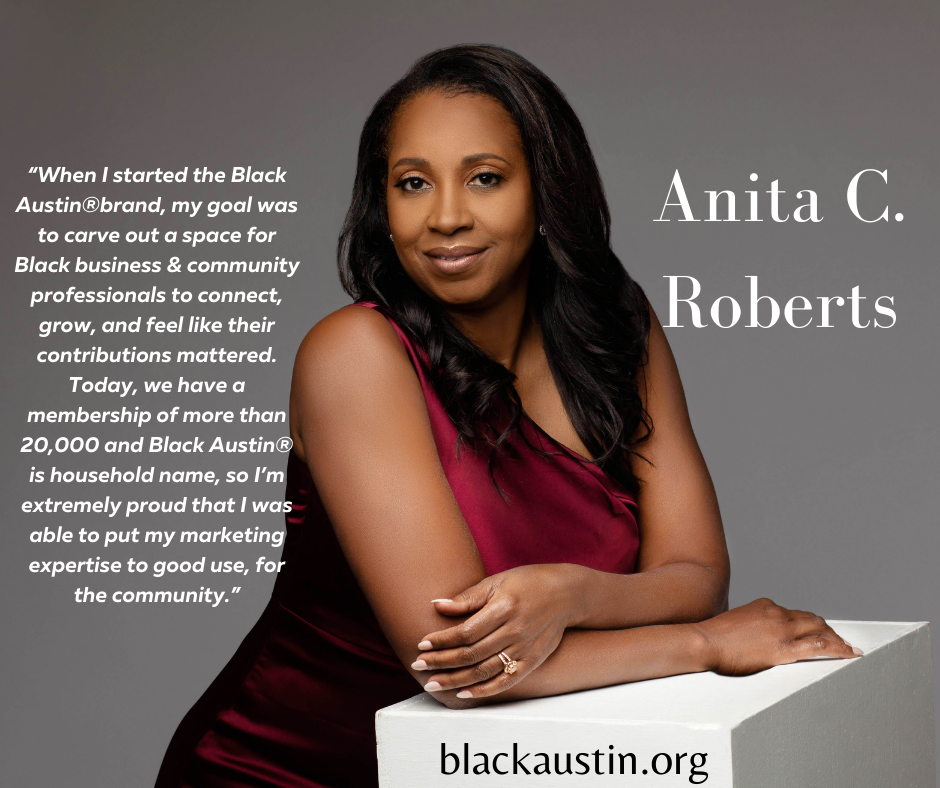
Being a Black woman in Austin, Texas can be a lonely life, just ask Anita C Roberts. We sat down with our founder to hear from her firsthand.
Black Business Journal: What do you like about living in Austin, Texas?
Roberts: Quite a bit. Both of my sons live here. Austin was a small city when I arrived 20 years ago, so it was very different from the metropolitan cities I was used to. But my motto is “bloom where you’re planted,” and I’ve done that. I raised my sons here, and I’m proud that they are upstanding, contributing citizens.
Black Business Journal: Has Austin been good to you and your family?
Roberts: I’ve lived here since 2004, when I was transferred as an active-duty member of the Texas National Guard and became the Commander of HHQ at Camp Mabry. It took me some time to figure life out after I retired, but for the most part, I’m happy to live here in Central Texas.
Black Business Journal: How would you describe Austin to someone who’s never been to Austin?
Roberts: It depends on who’s asking. If it were a 35-year-old African American divorced single mom, I would tell her there may be better places than Austin, Texas. Austin can be quite lonely. When I moved here, there were very few established community resources for African Americans—no places to congregate for business or after-hours networking. It was not a welcoming city.
When I arrived, I did my job and went home. I found a church in my community, and that was my life: work, home, church, kids’ activities. I didn’t really feel welcome in most spaces.
Today, however, things are different—because I chose to solve some of those issues by creating programs, services, events, and systems to help others like me feel welcome.
Black Business Journal: So now are things better?
Roberts: Well, somewhat. You see, when you are an outlier and you choose to solve generational problems that have existed for decades—and you are a Black woman—you often get more than you bargained for.
I heard an interview that really puts it in perspective: Black women are often vilified for doing good work, displaying incredible work ethic, and demonstrating profound business acumen. Sometimes even Black men who are felons and/or thieves receive more respect than Black women who have served honorably in combat for our country and refused to allow their work to be stolen or pushed aside. Sorry— if I’ve digressed.
Black Business Journal: Well, that was deep.
Roberts: Truth is stranger then fiction sometimes.
Black Business Journal: Let’s talk about Black Austin?
Roberts: Sure thing.
Black Business Journal: We know that you created the Black Austin ecosystem to help bring the Black community together. Why do you think there’s so much hostility surrounding your brand?
Roberts: I don’t harbor hostility toward anyone. I’m a fire and forget kinda girl. I’ve been taught to protect my brand, and I’m unapologetic about that. It’s actually interesting—if you build something and it’s used by most of the people you created it for, that’s a win. The problem is that some people are offended that I choose to protect my brand and not allow others to steal the work I created.